にじパパのアバター
にじパパ
ひとこと

保湿しとけばアレルギーにならないらしいよ

これを、僕は半年ぐらい信じていました。

だから毎日、お風呂上がりにべたべた塗って、これでアレルギー対策は完了だなと思っていました。

今回調べて、一番得をしたのがこの領域です。正直、思い込みがひとつ壊れました。
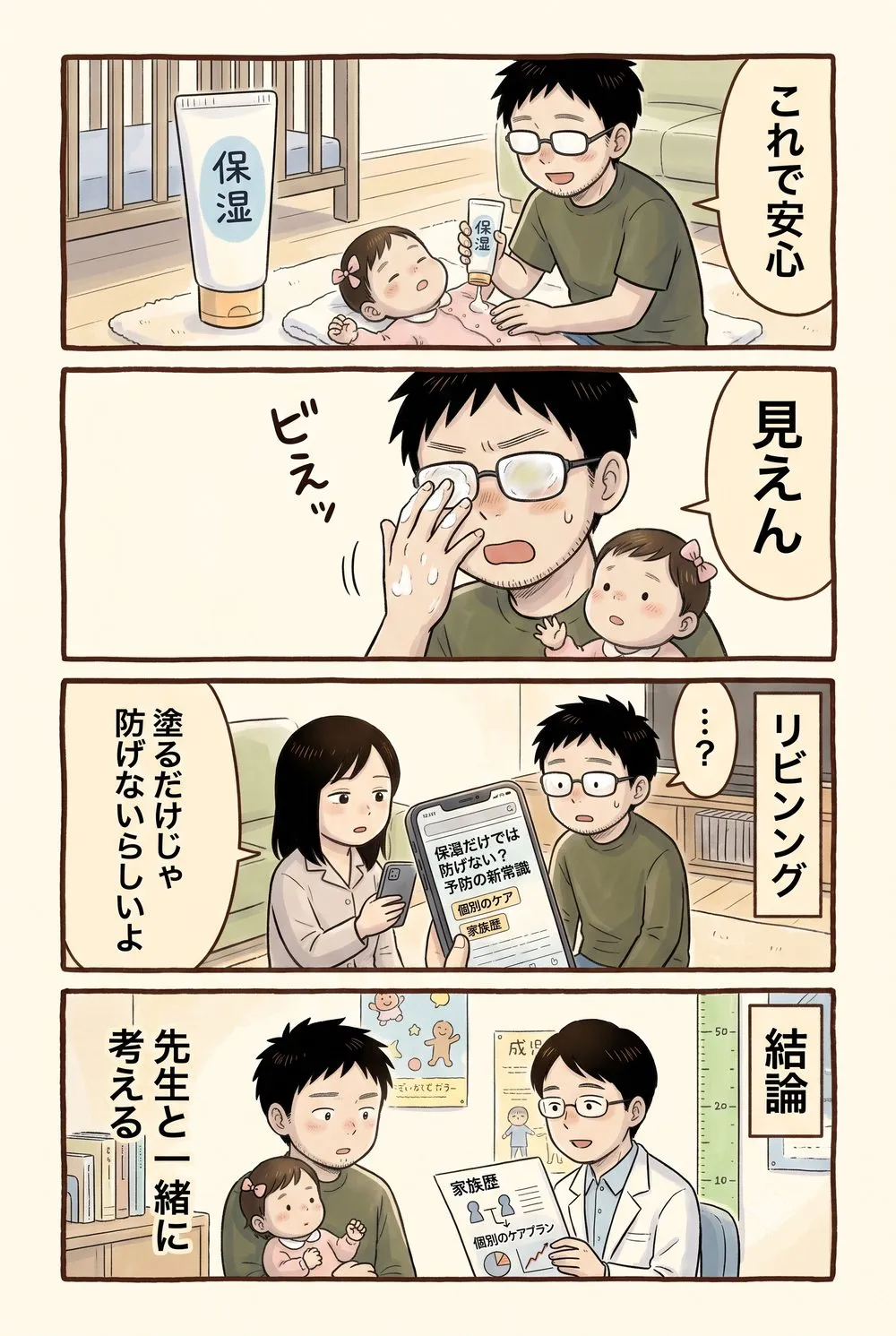
4コマ4コマ漫画。保湿クリームを塗って安心した父。妻に「塗るだけでは防げない」と教わり、最後は小児科で相談することに。
4コマ:保湿だけでは足りなかった

目次

  1. 保湿は、湿疹を予防してくれるのか?
  2. 湿疹と食物アレルギーは、つながっているのか?
  3. アレルゲンは、遅く始めたほうが安全なのか?

保湿は、湿疹を予防してくれるのか?

ここは注意して読んでほしいところです。

Cochrane(世界的な系統的レビューの団体)のレビューでは、健康な乳児に対してルーチンに保湿剤を塗ることだけで湿疹を予防できるとは言いにくく、むしろ皮膚の感染や食物アレルギーのリスクを上げる可能性も示されました。

でも、ここを読み違えると逆に危ないので、大事な線引きを。

  • この話は「症状のない健康な赤ちゃんに、予防目的で全員に塗ること」についてです
  • すでに湿疹やアトピー性皮膚炎がある子の治療・スキンケアをやめていいという話では、まったくありません

むしろ、湿疹があるならしっかり治す方向に話は進んでいます。次の見出しがその話です。

とはいえ、お風呂上がりのこの時間自体はやめていません。楽しいので。
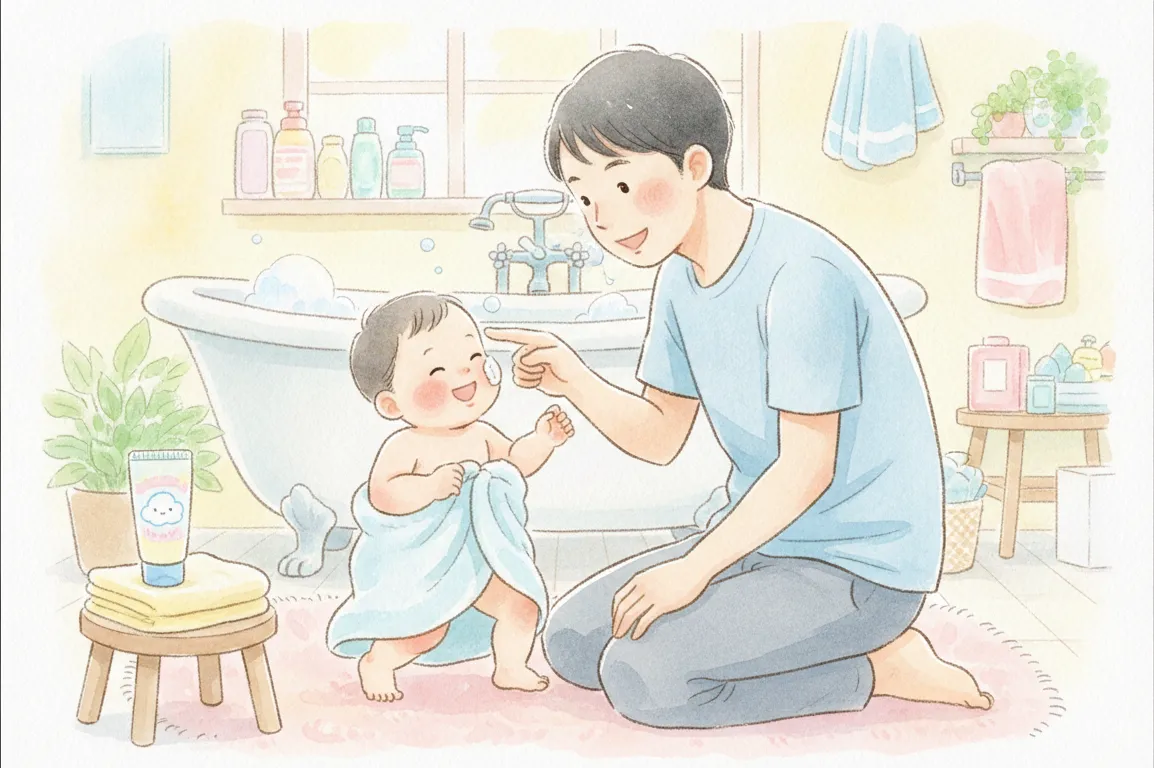
お風呂上がりに、笑う赤ちゃんの頬へ指先でクリームを塗る父親(水彩イラスト)
このあと、塗った手で自分のめがねを触ってしまい、世界がぼやけました。

湿疹と食物アレルギーは、つながっているのか?

ここが今の考え方の中心でした。

日本の食物アレルギー診療ガイドラインでは、乳児期の発症が多いことから、乳児アトピー性皮膚炎に関係する食物アレルギーが重要とされています。キーワードとしても「湿疹」「経皮感作」「早期介入」が前面に出てきます。

つまり、荒れた皮膚から食べ物の成分が入ることが、アレルギーのきっかけになりうると。

日本のJECS(子どもの健康と環境に関する全国調査)でも、早期に始まって持続する湿疹は、成長と食物アレルギーの両方のリスク上昇と関連していました。

だから離乳食を考えるときは、食物側と皮膚側を一体で考えるのが今の型らしい。湿疹を放置して食事だけ工夫しても、半分しか手を打てていないことになるんです。


アレルゲンは、遅く始めたほうが安全なのか?

ここはここ数年でかなり変わったところだそうです。

2025年の東西比較レビューでは、早期の経口導入だけでなく、その後の継続摂取と、湿疹の積極的な管理が重要とされていました。一度食べられたかでなく、続けられるか。

さらに日本のガイドラインでは、経口負荷試験を使ってちゃんと評価し、必要のない完全除去を避ける方向が強調されています。自己判断で卵を全部抜く、は逆方向だということです。

そしてここが今回一番大事な結論です。アレルゲンの導入のしかたとタイミングは、ネットでなく小児科で決める。とくにすでに湿疹がある場合は、必ず先に相談です。

:で、あなたの半年の自信はどこへ?

消えました。でも、消えてよかったと思っています。

まとめ

「塗っておけば安心」でも「除去しておけば安心」でもなく、皮膚と食事をセットで、小児科と一緒に見ていく。

なお、保湿剤のボトルは現在、上の子のおもちゃ箱に収納されています。返してほしい。

にじパパ「エビデンス育児」関連記事

※この記事は論文・ガイドラインの紹介で、診断や治療の代わりにはなりません。アレルギーの心配がある場合、アレルゲンの導入や除去を自己判断で行わず、必ず小児科・アレルギー専門医に相談してください。すでに湿疹やアトピー性皮膚炎の治療中の方は、自分の判断でケアを中止しないでください。
主な出典:食物アレルギー診療ガイドライン(日本・2020・2021更新)/Cochrane 皮膚ケア介入に関する系統的レビュー(2022)/East meets West 食物アレルギー予防レビュー(2025)/JECS(子どもの健康と環境に関する全国調査)の湿疹と成長・食物アレルギーに関する研究。
“Moisturize and They Won’t Get Allergies” Turned Out to Be Too Simple: Eczema and Food Allergies

にじパパのアバター
にじパパ
ひとこと

Apparently if you just keep them moisturized, they won’t get allergies.

I believed that for about six months.

So every day after the bath, I slathered it on and thought: allergy prevention, done.

Of everything I looked into for this post, this is where I gained the most. Honestly, one of my assumptions got demolished.

Contents

  1. Does moisturizing prevent eczema?
  2. Are eczema and food allergies connected?
  3. Is it safer to introduce allergens later?

Does moisturizing prevent eczema?

This is the part I want you to read carefully.

A review by Cochrane (the international organization known for its systematic reviews) found that routinely applying moisturizer to healthy infants, by itself, can’t really be said to prevent eczema — and may even raise the risk of skin infections and food allergy.

But misreading this is dangerous in the opposite direction, so here is the line that matters.

  • This finding is about applying moisturizer to every healthy, symptom-free baby purely for prevention
  • It is absolutely not saying you can stop treatment or skincare for a child who already has eczema or atopic dermatitis

If anything, the field has moved toward treating eczema properly when it’s there. That’s exactly what the next section is about.

That said, I haven’t given up our post-bath ritual itself. It’s fun.

Watercolor illustration: after a bath, a father dabs cream onto his laughing baby’s cheek with a fingertip.
Right after this, I touched my glasses with the cream hand, and the world went blurry.

Are eczema and food allergies connected?

This turned out to be the heart of current thinking.

Because onset is so common in infancy, Japan’s clinical practice guidelines for food allergy treat food allergy linked to infant atopic dermatitis as a key concern. The keywords pushed to the front are “eczema,” “transcutaneous sensitization” (sensitization through the skin), and “early intervention.”

In other words: food components getting in through damaged skin can be what sets an allergy off.

In Japan’s JECS (the Japan Environment and Children’s Study, a nationwide study), too, eczema that started early and persisted was associated with increased risk in both areas: growth and food allergy.

So when you plan those first solid foods, the current playbook is apparently to treat the food side and the skin side as one problem. Leave the eczema alone and only fine-tune the menu, and you’ve covered exactly half of it.


Is it safer to introduce allergens later?

Apparently this is an area that has changed quite a bit over the past few years.

A 2025 review comparing East and West described not just early oral introduction, but continued intake afterward and active management of eczema as what matters. Not whether they ate it once — whether they can keep eating it.

On top of that, Japan’s guidelines emphasize proper evaluation using oral food challenges and avoiding complete elimination that isn’t necessary. Cutting out all egg on your own judgment points in exactly the wrong direction.

And here is the most important conclusion of this whole post: how and when to introduce allergens gets decided at the pediatrician’s office, not on the internet. Especially if there is already eczema, talk to the doctor first — always.

Wife: So where did those six months of confidence go?

Gone. And honestly, I’m glad it is.

Wrapping up

Not “moisturize and you’re covered.” Not “eliminate and you’re covered.” Skin and diet as a set, watched together with your pediatrician.

As for the moisturizer bottle, it is currently stored in our older kid’s toy box. I would like it back.

More from Nijipapa’s “Evidence-Based Parenting” series

Note: This post introduces research papers and guidelines; it is not a substitute for diagnosis or treatment. If you have any concerns about allergies, do not introduce or eliminate allergens on your own judgment — always consult a pediatrician or an allergy specialist. If your child is already being treated for eczema or atopic dermatitis, do not stop their care on your own.
Main sources: Food Allergy Clinical Practice Guidelines (Japan, 2020; updated 2021) / Cochrane systematic review of skin care interventions (2022) / “East meets West” review of food allergy prevention (2025) / JECS (Japan Environment and Children’s Study) research on eczema, growth, and food allergy.